


OMIM ID:
Corneal Dystrophy, Posterior Polymorphous 3
Alternate Names
Defective Genes
Clinical Characteristics
Ocular Features
This is a genetically and clinically heterogeneous type of corneal dystrophy. Endothelial metaplasia seems to play a role as these cells acquire some characteristics of epithelial cells. The posterior cornea has guttae and lesions of various sizes surrounded by a grayish halo. These may become confluent and lead to stromal edema extending into the epithelium. The thickness of the Descemet membrane is highly variable and a retrocorneal membrane may be present. Onset is variable as some infants will have corneal edema whereas many, if not most, adults are asymptomatic. The condition in severely affected children may resemble congenital hereditary corneal dystrophy.
Systemic Features
No consistent systemic abnormalities have been reported. However, some patients have been reported with inguinal hernias, hydroceles, and possible bone abnormalities suggesting that the ZEB1 mutation may have extraocular effects as well.
Genetics
Inheritance
Pedigree
Autosomal dominant
Autosomal dominant disorders require only one mutation for the disease to be expressed. Since an affected parent has two chromosomes, only one of which has the mutant gene, parents can expect that half (50%) of their children will receive that one and inherit the disease. It is common for individuals that inherit the mutation, however, to not have evidence of the disease (nonpenetrance).
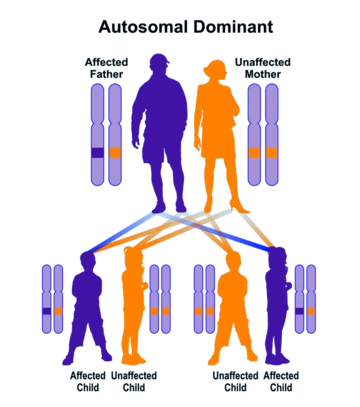
Autosomal dominant inheritance leads to a vertical pattern of transmission